The opinion piece by Elvir Ahmetovic and Patrick McCarthy was published in both the print and online editions of the St. Louis Post-Dispatch on June 18, 2025.
This July marks 30 years since the Srebrenica genocide — the worst massacre on European soil since World War II. In July 1995, over 8,000 Bosniak men and boys were executed by Bosnian Serb forces in and around the United Nations-declared “safe area” of Srebrenica, in addition to the thousands who were killed during the siege of the town that began in 1992
Thousands more women, children and the elderly were forcibly displaced, terrorized and violated. The sheer brutality of what occurred in just a few days shocked the world. It was the culmination of a years-long campaign of ethnic cleansing and genocide in Bosnia and Herzegovina.
One of us survived Srebrenica. The other has spent decades trying to ensure Americans do not forget what happened there. The Srebrenica genocide has special relevance in St. Louis, home to hundreds of survivors and their families.
We write together — Bosnian and American — not only to honor the memory of the victims but to reaffirm the shared moral responsibility to confront genocide, safeguard truth, and stand against the normalization of hate and denial.
Memory is not passive. It is an act of resistance. For those of us who survived, remembering Srebrenica is both deeply personal and politically urgent. Our lives were shattered, our families torn apart, and our wounds still deep and painful.
Many survivors in St. Louis live with the trauma of those days as well as the painful burden of denial and revisionism that has only intensified over the years. Genocide denial — whether in Bosnia or globally — is not just the refusal to acknowledge past atrocities; it is a continuation of them.
The genocide in Srebrenica has been confirmed by international courts, including the International Criminal Tribunal for the former Yugoslavia and the International Court of Justice. Yet, to this day, political leaders in Bosnia and Serbia deny it, glorify war criminals, and undermine efforts at reconciliation. Meanwhile, survivors still search for remains of their loved ones in unmarked mass graves. The pursuit of justice is far from over.
In St. Louis, the story of Srebrenica is not a distant tragedy — it is a reminder of both failure and responsibility. The United States and other Western powers failed to prevent the genocide, despite repeated warnings and undeniable evidence of escalating atrocities.
But American citizens, journalists, and activists played critical roles in bringing attention to Bosnia’s plight. Some pressured policymakers. Others documented war crimes or worked with refugee communities, and some lost their lives in the process. In the wake of genocide, the U.S. contributed to peacekeeping, reconstruction, and support for war crimes prosecutions. That legacy, while imperfect, matters and is appreciated by the Bosnian people.
Today, as we mark three decades since the genocide, we must ask: What does “Never Again” really mean?
It means standing up against all forms of extreme nationalism, racism, and dehumanization — whether in Bosnia, in the United States, or anywhere in the world. It means supporting survivors, defending historical truth, and refusing to look away when new genocides begin to unfold. And it means recognizing that genocide does not begin with bullets; it begins with words — hate speech, demonization, the slow erosion of empathy, and dehumanization.
We also must invest in memory. The important work of local institutions like the Center for Bosnian Studies at Saint Louis University, which records survivor testimonies, is vital for educating new generations. Education is our most powerful weapon against denial and indifference.
Local universities, museums, schools, and civic institutions are integrating Bosnia’s story into broader lessons about genocide, human rights, and the fragility of peace. They have come together as partners in a Srebrenica Remembrance Coalition to mark this significant anniversary with dedicated programming.
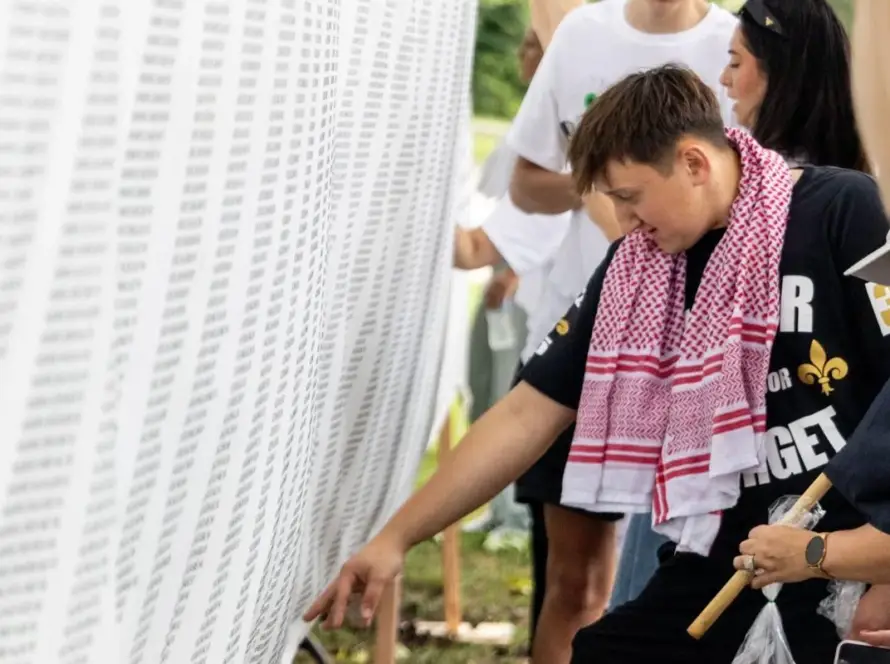
The victims of Srebrenica were not just numbers. They were fathers, sons, brothers, teachers, and students. Their lives mattered; they have names, which we need to say out loud, whenever possible. Our remembrance must go beyond symbolism — it must carry into action.
As a survivor and an ally, we invite St. Louisans and Missourians to stand with us this July 12 when we gather at the Soldiers Memorial Museum for a commemoration program and walk of remembrance. Visit neverforgetsrebrenica.org for details.
Attend the commemoration. Learn a name. Listen to a story. Speak out against hate in our own community. Thirty years later, the dead still call us to justice. Let us not be silent.